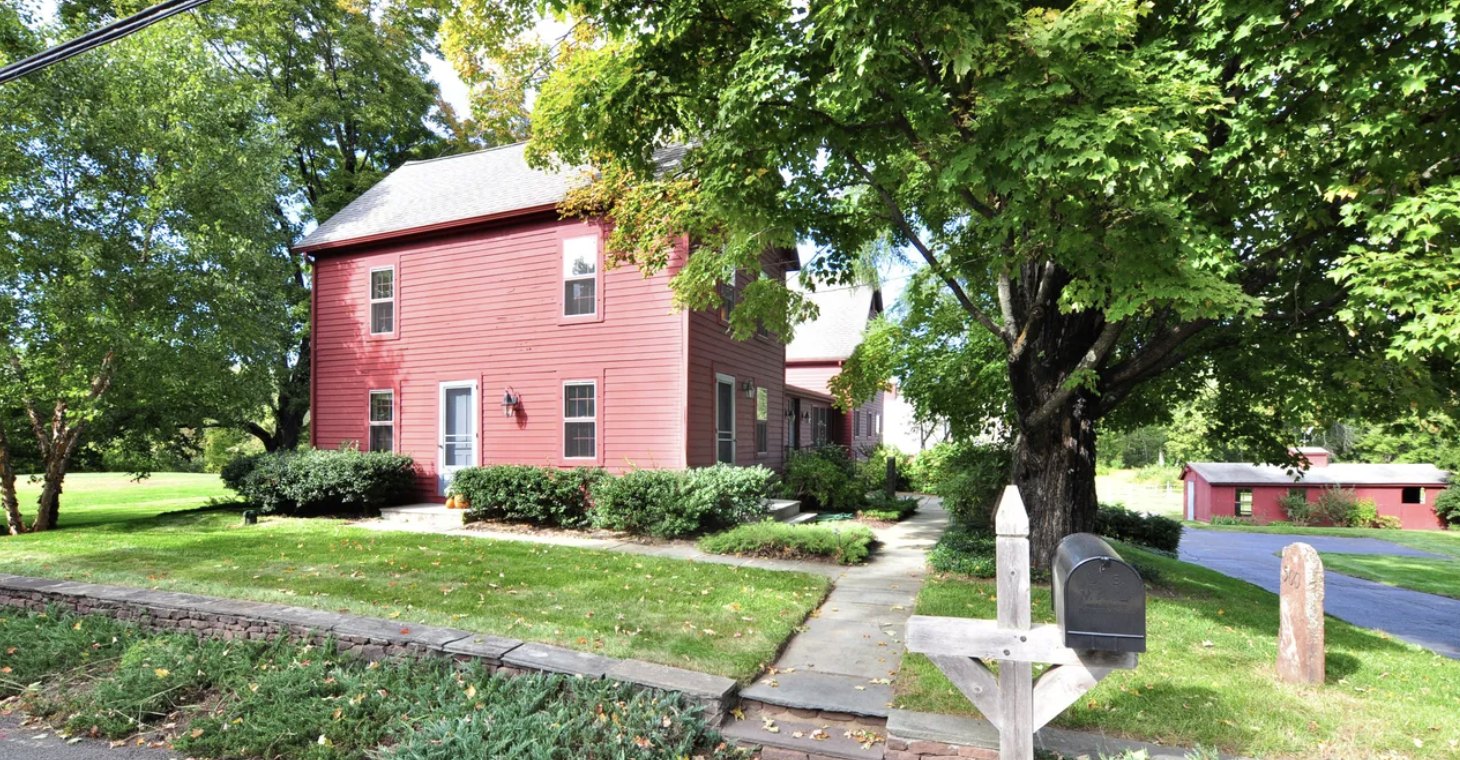
A Simsbury home built in 1862
Simsbury CT Historic Homes:
A Buyer's Guide to Pre-1900 Properties

Quick Answer
- Simsbury's historic homes cluster in East Weatogue's farmsteads, Simsbury Center's Victorians, and Tariffville's mill-village stock, priced from the mid-$400,000s past $1.2 million.
- Buy with specialty inspections, a check on historic district status, and the state's 30% rehabilitation credit in mind. Sell with documented updates.
Simsbury's oldest homes are some of the most sought-after in the Farmington Valley, and some of the most misunderstood. A house built in 1862, like the one pictured above, has stood through more than a century and a half of owners, repairs, and additions. Buyers who treat that history as an asset and plan for it do very well. Buyers who skip the homework meet it as a surprise bill.
This guide covers where Simsbury's historic homes are, what they cost, which rules may apply, the inspections that matter, the state tax credit, and how sellers can present an older home well.
Where Simsbury's Historic Homes Are
| Area | Typical Historic Stock | Price Range |
|---|---|---|
| East Weatogue | 18th and 19th century farmsteads on one to three-plus acres | $750K to $1.2M+ |
| Simsbury Center | Victorians, colonials, and capes along Hopmeadow Street on modest lots | $450K to $850K |
| Tariffville | Mill-era homes and Victorians in the former mill village on the Farmington River | Typically $50K to $100K below comparable homes elsewhere |
East Weatogue is the premium pocket, where a restored farmstead on acreage sits at the top of Simsbury's range. Simsbury Center trades on walkability: restaurants, the library, and shops are a few minutes away on foot. Tariffville is the value entry, with river access and the Farmington River Trail close by. Full area profiles are in Simsbury CT Neighborhoods: Where to Live, and the top of the market is covered in Simsbury CT Luxury Homes Over $900K.
What a Pre-1900 House Really Is
A home built in 1862 predates electric service, central heating, and modern plumbing. Every one of those systems was added later, usually in stages by different owners. The pictured house shows the common New England shape: a clapboard main house, a side ell added as the family grew, and a detached outbuilding. Each addition has its own age and its own framing.
That layering is why older homes are inspected by system and by section. A renovated kitchen in a 1990s addition tells you nothing about the wiring in the original house. Ask the seller for a dated list of updates: roof, heating, electrical panel, plumbing, windows, and septic or well work.
Is the House in a Historic District?
Two different things get called historic. A local historic district is a legal review area. A National Register listing is a recognition. Simsbury's Historic District Commission oversees local districts, including the East Weatogue Street Historic District, and issues Certificates of Appropriateness for work in them. The commission meets the first Thursday of each month at 7:00 p.m., and applications must reach the Planning and Land Use Department at least three weeks before the meeting.
Ask the town whether a specific address is in a local district before you make an offer. If it is, plan windows, siding, and any addition around that timeline. If it is not, you have more freedom, though a register listing can still matter for the tax credit below.
Inspections That Matter on an Older Home
- Lead paint. Federal rules require sellers of pre-1978 homes to give buyers the EPA pamphlet and disclose what they know. Buyers get 10 days to inspect for lead paint unless both sides agree otherwise. Details: EPA lead disclosure rules.
- Oil tank. Older Connecticut homes often heat with oil. Check the age and location of the tank and ask whether any buried tank was ever removed.
- Electrical. Look for outdated wiring types, a low-capacity panel, and ungrounded outlets.
- Foundation and moisture. Stone and brick foundations need an inspector who knows them, and a dry basement should be confirmed in wet weather if possible.
- Chimneys and flues. Have each flue scoped before you use any fireplace.
- Well and septic. Test the water and verify septic capacity, especially if you plan a bedroom addition.
Schedule these inside Connecticut's attorney review period so they do not delay your closing. The full sequence is in How to Buy in the Farmington Valley.
Insurance and Financing
Get an insurance quote before you go under contract. Insurers price older homes on the age of the roof, wiring, and heating system, and the cost to rebuild period detail can exceed a standard estimate. A quote early lets you negotiate repairs or credits before the inspection period ends.
Financing works the same way as any purchase, with one caution. Historic homes can have few direct comparable sales, which raises appraisal risk. Homes above roughly $800,000 to $900,000 typically involve jumbo financing, so talk to a lender who writes Connecticut jumbo loans before you tour. The services page covers the process at $900,000 and above.
The State Tax Credit: Up to $30,000 Back
Connecticut's Historic Homes Rehabilitation Tax Credit returns 30 percent of qualified rehabilitation expenses, up to $30,000 per dwelling unit. It applies to one- to four-unit homes listed on the State or National Register of Historic Places, individually or within a historic district. The Hartford Preservation Alliance summarizes the rules.
Credit by Qualified Spending (30% Credit, $30,000 Cap Per Unit)
Calculated by Peter Tumbas from the program's published 30% rate and $30,000 per-unit cap. The program requires at least $15,000 in qualified expenses. Confirm current availability and rules with the State Historic Preservation Office.
The credit reaches its $30,000 cap at $100,000 of qualified work, so spending beyond that earns no additional credit. The rules are strict: at least $15,000 in qualified expenses, owner occupancy of one unit for five years after the work, State Historic Preservation Office approval before any work begins, and all work on the property meeting the Secretary of the Interior's Standards for Rehabilitation. Allow at least 30 days for the initial approval. Check whether a property is registered before you assume the credit applies.
What the Taxes Look Like
Simsbury's mill rate is 35.00 (33.67 base plus 1.33 fire district). At Connecticut's 70 percent assessment ratio, annual property tax follows the purchase price directly.
Estimated Annual Property Tax in Simsbury by Purchase Price
Based on 35.00 mills at a 70% assessment ratio, 2025 Grand List, FY 2026-2027. Source: CCM Data Hub. Verify current figures with the Simsbury Assessor's Office before closing.
A Simsbury Center home near $850,000 carries about $20,825 a year, and an East Weatogue farmstead at $1.2 million about $29,400. Add insurance and a maintenance reserve to those figures when you set your monthly budget. For out-of-state buyers, Simsbury property tax for out-of-state buyers explains the bill in detail.
Selling a Historic Simsbury Home
Sellers of older homes have a story that new construction cannot match. Present it with documents. Gather permits, receipts for roof, heating, and electrical work, and any survey or prior inspection. A pre-listing inspection removes the biggest unknown and lets you price against known conditions.
The Simsbury Historical Society, founded in 1911, offers research appointments, which can help a seller trace a home's past. Include the build year and any documented history in the listing. Then price from recent closed sales and the buyer's monthly payment, as covered in How to Price a Home in the Farmington Valley and What Valley Buyers and Sellers Should Do About Mortgage Rates.
Buyer's rule: Budget for the house you are buying and the house it will need. List the three oldest systems, get a number for each from a contractor, and decide before the inspection period ends whether the price still works.
Many older Simsbury homes sit near the Farmington River. Before you plan a renovation, read Simsbury CT Homes Near the Farmington River: Flood Zones, Insurance, and the Buyer's Checklist for flood zone and substantial improvement rules.
Looking at a home with a finished basement or an addition? See Simsbury CT Homes With Finished Basements, Additions, and Permit Questions for the records to pull.
Considering a historic home in Simsbury, or preparing to sell one? A direct conversation about the property, its status, and your plan saves time and surprises.
Submit a private inquiry or reach me directly:
412-225-0598 · PeterTumbas@bhhsne.com
Frequently Asked Questions
What counts as a historic home in Simsbury CT?
There is no single age rule. Buyers usually mean homes from the 19th century or earlier, such as farmsteads in East Weatogue, Victorians near Hopmeadow Street, and mill-era homes in Tariffville. What matters legally is whether the property sits in a local historic district or is listed on the state or national register. The town's Historic District Commission reviews work in local districts, including the East Weatogue Street Historic District.
Where are Simsbury CT's historic homes located?
Three areas hold most of them. East Weatogue has 18th and 19th century farmsteads on one to three-plus acres, priced from $750,000 past $1.2 million. Simsbury Center along Hopmeadow Street has Victorians, colonials, and capes from the mid-$400,000s to about $850,000. Tariffville, the former mill village on the Farmington River, typically prices $50,000 to $100,000 below comparable homes elsewhere.
Do I need approval to renovate a historic home in Simsbury CT?
It depends on whether the address is in a local historic district. If it is, exterior work goes through the Historic District Commission, which meets the first Thursday of each month at 7:00 p.m. Applications must reach the Planning and Land Use Department at least three weeks before the meeting. Confirm the status of a specific address with the town before you make an offer. Details are on the commission page.
Is there a tax credit for renovating a historic home in Connecticut?
Yes. The Historic Homes Rehabilitation Tax Credit offers 30 percent of qualified expenses, up to $30,000 per dwelling unit, for one- to four-unit homes listed on the State or National Register of Historic Places, individually or in a district. The minimum spend is $15,000, and the work needs State Historic Preservation Office approval before it starts. See the Hartford Preservation Alliance summary and confirm current availability with the state.
What inspections does a pre-1900 home in Simsbury CT need?
Order the general inspection plus specialty inspections: lead paint, oil tank, electrical wiring and panel, chimney and flue, stone or masonry foundation moisture, and well and septic where the home has them. Schedule them inside Connecticut's attorney review period so they do not push your closing date. See How to Buy in the Farmington Valley for the full sequence.
Does lead paint disclosure apply to Simsbury CT homes built before 1978?
Yes. Federal rules require sellers of pre-1978 homes to give buyers the EPA lead pamphlet, disclose what they know about lead-based paint, and share any records. Buyers get 10 days to inspect for lead paint unless both sides agree to change or waive that period. The EPA disclosure page has the details.