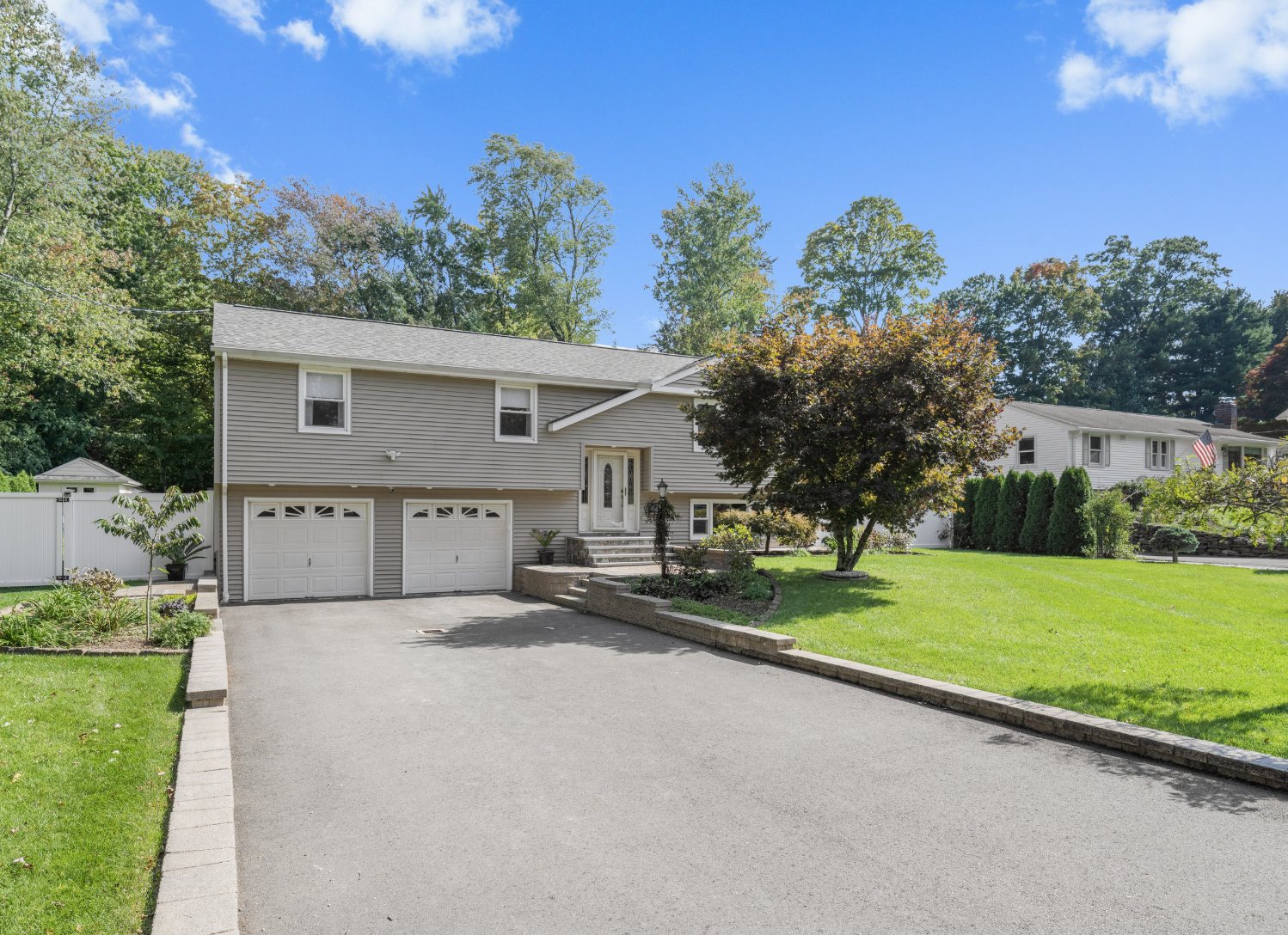
A 4 bedroom in Farmington near UConn Health, listed by Amy Drew of Berkshire Hathaway
Farmington CT Homes Near UConn Health:
Commute-First Living for Medical and Professional Buyers

Quick Answer
- UConn Health is at 263 Farmington Avenue in Farmington, and our Valley commute guide puts most Farmington addresses at 5 to 10 minutes, the shortest drive of any Valley town.
- Farmington's FY 2026-27 rate is 27.36 mills, the lowest of the five Valley towns, but drive your shift-time route and compare actual parcel tax bills.
For some buyers the search starts with a drive, not a house. If your day begins or ends at UConn Health, or at an office along the Farmington Avenue corridor, a few minutes each way adds up to hours over a year, and it changes how a home feels at the end of a long shift.
This guide is for that commute-first buyer. It covers how the drive compares across the Valley, which Farmington areas our neighborhood guide places closest to the campus, what the tax rate means in dollars, and what to check before you make an offer. For the broader physician-relocation picture, see our UConn Health medical buyer guide.
Why Farmington Is the Commute-First Town
UConn Health is located at 263 Farmington Avenue, inside Farmington. BioCT's profile describes the health center as including a school of medicine, a school of dental medicine, and John Dempsey Hospital. No other Valley town has the campus within its borders, so Farmington addresses start closer by definition.
| Town | Typical Drive to UConn Health | Route |
|---|---|---|
| Farmington | 5 to 10 minutes | Farmington Avenue direct |
| Avon | 15 to 20 minutes | Route 10 south to Farmington Avenue |
| West Hartford | 15 to 25 minutes | Farmington Avenue west |
| Simsbury | 25 to 35 minutes | Route 44 to Route 10 south |
| Canton | 25 to 30 minutes | Route 44 to Route 10 south |
| Granby | 35 to 45 minutes | Route 44 to Route 10 south |
These are estimates under normal driving conditions from our medical buyer guide, not measured times. Traffic, shift timing, and the exact address change them. Drive the route at the hour you would actually leave for work, and drive it home again at the end of a day.
The advantage is also not equal across Farmington. Our Farmington guide estimates 8 to 12 minutes from Farmington Village and Unionville, a little longer than the 5 to 10 minutes it gives for most of town. If the shortest possible drive is the point, use drive time from the specific address as the filter, not the town name.
Farmington Areas by Commute and Price
| Area | What Our Guide Says | Approximate Search Range |
|---|---|---|
| Devonwood and High Street corridor | East of Route 10, close to the Farmington Avenue medical and corporate campus; custom colonials and contemporary builds on generous lots | $600K to $1.4M |
| Farmington Village | Main Street historic district with 18th and 19th century homes and walkable character | $550K to $1.5M |
| Cider Mill and northern Farmington | Larger lots and established streets with a mix of colonial and ranch-style homes | $450K to $850K |
| Unionville | Western village district along the Farmington River with a lower price floor | $380K to $700K |
These are approximate buyer-search ranges from our Farmington guide, not a statistical summary of closed sales. Each address is its own case, so confirm price and drive time for the specific home. See The Two Farmington CT Markets for how the Village and the east side differ, and Living in Farmington for daily life.
What the 27.36 Mill Rate Means in Dollars
Property tax is calculated from the parcel's taxable assessed value, not automatically from its purchase price. Farmington's rate is 27.36 mills for FY 2026-2027, or $27.36 per $1,000 of taxable assessed value, per the CCM Data Hub. Connecticut assesses at 70 percent of fair market value, so the chart below applies that ratio to hypothetical values.
Illustrative Farmington Property Taxes at 27.36 Mills
These examples assume taxable assessed value equals 70% of the stated hypothetical market value. They are not parcel-specific estimates based on purchase price. Actual taxes depend on the assessor's recorded value, applicable exemptions or land classifications, and current mill rates. Source: CCM Data Hub.
For scale, a $490,000 taxable assessment (a hypothetical $700,000 value) produces about $13,406 at Farmington's 27.36 mills, about $15,582 at Avon's 31.80, and about $17,150 at Simsbury's 35.00. That is a rate comparison on equal assessments. The homes will not be assessed equally, so compare actual parcel tax bills, not mill rates alone. Our Farmington property tax guide and Farmington vs Avon go deeper.
Financing a Relocation on a Short Timeline
Relocations are often compressed, so line up financing before you tour. Some lenders offer physician loan programs, and the terms differ from conventional loans and from lender to lender, so ask several lenders to compare the rate, down payment, and mortgage insurance. A physician loan is not automatically the cheaper path for a buyer with ample cash, so compare it against a conventional loan.
Jumbo status depends on the loan amount, not the price. The FHFA 2026 baseline conforming loan limit for a one-unit home is $832,750, so a larger down payment can keep a higher-priced home inside conforming limits. Ask your lender how the limit applies to your loan.
What to Check on a Home Near UConn Health
- The real drive. Test the route at your shift start and end times, including a night or weekend trip if you take call.
- School zone. Farmington assigns elementary schools by zone among West District, East District, and Noah Wallace. Confirm the zone for the address with Farmington Public Schools. Our Farmington schools guide has the structure.
- Flood zone. The Farmington River runs through western Farmington and Unionville, so run a flood zone check if the home is near the river. The method is in our flood zone guide, which is written for Simsbury but applies the same steps.
- Permits on finished or added space. Ask for permit records and a certificate of occupancy on finished lower levels, additions, and garage conversions, which are common in ranch and raised ranch styles.
- Household commute. If a spouse or partner works elsewhere, test that drive too. Avon trades a longer UConn Health drive for a different school and tax profile, as covered in Farmington vs Avon.
- Actual tax bill. Ask for the parcel's assessment and last bill, and confirm whether a revaluation could change it.
Coordinate these checks with your attorney and schedule them within the inspection and due-diligence deadlines written into your purchase contract. The full sequence is in How to Buy in the Farmington Valley.
If You Are Selling Near the Campus
A short, documented commute is a real selling point, but it needs support. Gather the school zone, permit records for finished space, recent upgrades, and the last tax bill. Price from closed sales and documented condition, as covered in How to Price a Home in the Farmington Valley, and plan the timeline with Selling in the Farmington Valley.
Farmington or Another Valley Town?
- Choose Farmington if the shortest drive to UConn Health and the lowest Valley mill rate lead your list.
- Choose Avon if school profile and executive-community character outweigh a 15 to 20 minute drive. See Farmington vs Avon.
- Choose Simsbury if river access and a village center matter more than a longer drive. See Farmington vs Simsbury.
- Compare schools across all five towns in Farmington Valley Schools Compared.
Buyer's rule: Filter by drive time from the address, not the town name. Test the route at your shift hours, confirm the school zone, and compare the actual parcel tax bill before your contract deadlines pass.
Relocating to UConn Health or an office along the Farmington Avenue corridor? A direct conversation about drive time, neighborhoods, and your timeline saves time and surprises.
Submit a private inquiry or reach me directly:
412-225-0598 · PeterTumbas@bhhsne.com
Frequently Asked Questions
How far is Farmington CT from UConn Health?
UConn Health is at 263 Farmington Avenue in Farmington. Our Valley commute guide estimates 5 to 10 minutes from most Farmington addresses and 8 to 12 minutes from Farmington Village and Unionville under normal driving conditions. Drive your own route at your actual shift start time before you commit to an address.
Which Farmington neighborhoods are closest to UConn Health?
Our Farmington guide describes the Devonwood and High Street corridor, east of Route 10, as sitting close to the Farmington Avenue medical and corporate campus, with an approximate $600,000 to $1.4 million buyer-search range. Confirm the drive from the specific address, because distance and drive time are not the same thing.
What is the property tax rate in Farmington CT?
Farmington's rate is 27.36 mills for FY 2026-2027, according to the CCM Data Hub, the lowest of the five Farmington Valley towns we cover. At 27.36 mills, a taxable assessment of $420,000 produces an annual bill of about $11,491. Taxes depend on the assessor's recorded value, not the purchase price, so check the specific parcel.
Is Farmington cheaper to own in than Avon?
On the same taxable assessment, Farmington's 27.36 mills against Avon's 31.80 differ by 4.44 mills, which is about $2,176 a year on a $490,000 assessment. That is a rate comparison only. Compare actual parcel tax bills and purchase prices, not mill rates alone.
Are physician mortgage programs available in Connecticut?
Some lenders offer physician loan programs, and their terms differ from conventional loans and from one lender to the next. Ask several lenders to compare the rate, down payment, and mortgage insurance terms against a conventional loan. Whether a loan is jumbo depends on the loan amount, not the price. The FHFA 2026 baseline conforming limit for a one-unit home is $832,750.
Which elementary school would a Farmington home attend?
Farmington assigns elementary schools by zone among West District, East District, and Noah Wallace. Confirm the zone for the specific address with Farmington Public Schools, especially near a boundary.
What should I check before buying near UConn Health?
Drive the route at your real shift start time, confirm the elementary school zone, check the flood zone if the home is near the Farmington River, ask for permit records on any finished or added space, and compare the actual parcel tax bill. Coordinate these checks with your attorney within the deadlines in your purchase contract.